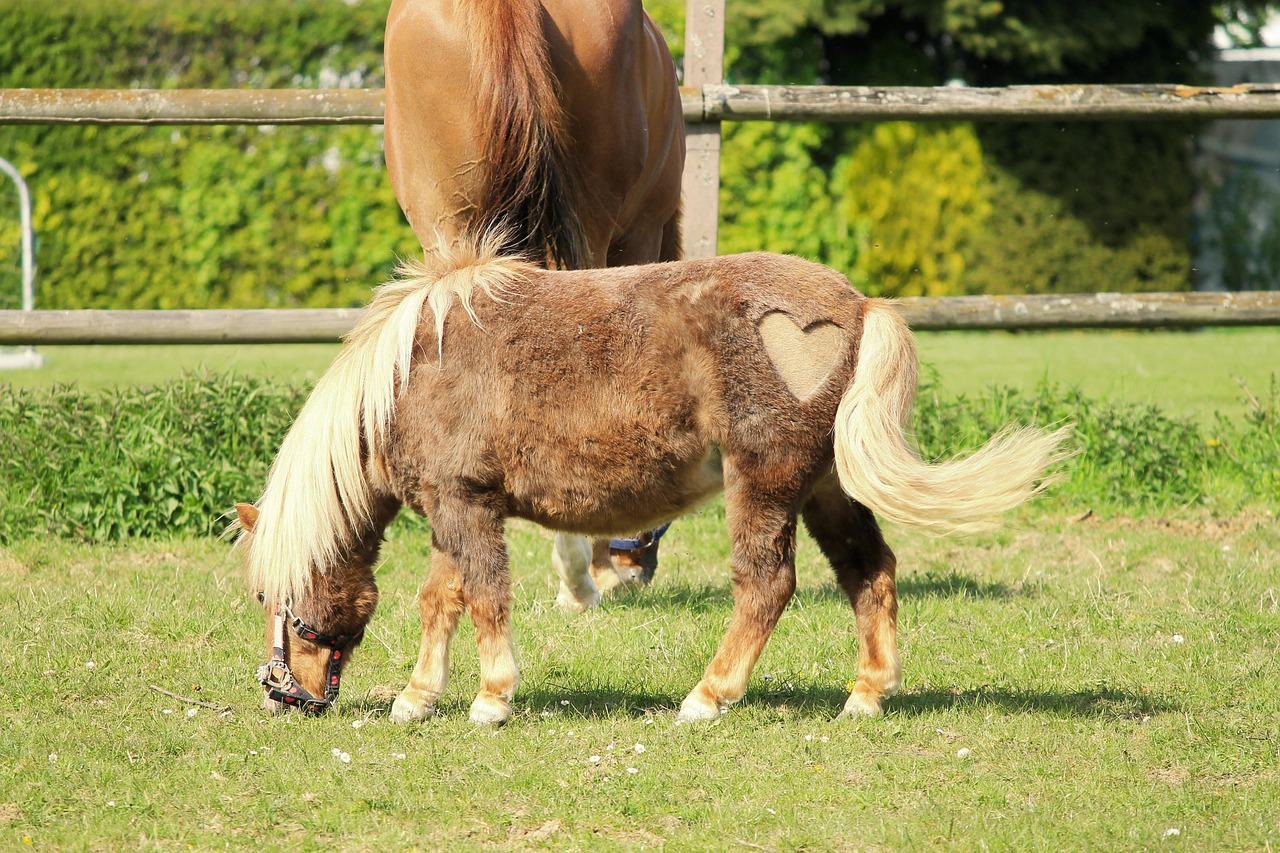
Feeding a miniature horse might sound simple. They’re small, so they must eat less, right? Well, yes… but it’s not quite that easy! Mini horses have delicate digestive systems that need a careful balance of nutrients. Overfeeding can lead to health issues like obesity and laminitis, while underfeeding can cause nutrient deficiencies. The key is finding that sweet spot of nourishment, portion control, and quality feed. Whether you’re new to mini horse ownership or just want to fine-tune your feeding routine, here’s everything you need to know about what to feed (and what to avoid).
Start with Forage: Hay As the Foundation
Mini horses thrive on a diet primarily made of good-quality grass hay. Ideally, they should eat about 1.5% of their body weight in hay per day. That means if your mini weighs 250 pounds, they’ll need around 3.5–4 pounds of hay daily. Timothy or orchard grass hay works beautifully; alfalfa is often too rich unless recommended by a vet. Keep hay clean, mold-free, and served in small, frequent portions to mimic natural grazing patterns.
Limit the Grain (Or Skip It Altogether)
Grain isn’t always necessary for minis. In fact, many do best on hay alone with a vitamin/mineral supplement. Grain can pack in calories quickly, leading to weight gain and metabolic issues. If your mini is working hard, nursing, or underweight, you can add a low-starch, low-sugar pellet feed designed for miniature horses. Always introduce new feed slowly to prevent digestive upset.
Provide Plenty of Fresh Water and Salt
Just like big horses, minis need access to fresh, clean water all day long. A small automatic waterer or bucket changed twice a day works well. Add a plain white salt block [*not the mineral kind made for cattle*] to help regulate hydration and encourage healthy drinking habits.
Watch the Pasture
Lush green grass might look beautiful, but it can be dangerous for minis. Too much sugar-rich pasture can lead to obesity and laminitis. Limit grazing time, especially in spring and fall when grass sugars spike. If possible, use a grazing muzzle or rotate turnout areas. Dry lots are a safe option if your mini is prone to weight gain.
Supplements and Treats: Less Is More!
A well-balanced diet sometimes needs a little boost. Common supplements for mini horses include probiotics, biotin (for hooves), and omega-3s for coat health. Always check with your vet before adding anything new. As for treats? Minis adore carrots, apple slices, and horse-safe snacks, just in moderation. A few bites go a long way for their tiny tummies!
Keep an Eye on Weight and Health
Weigh your mini horse regularly or use a weight tape to track changes. You should be able to feel ribs under a thin layer of fat but not see them. Sudden weight gain or loss could signal a feeding imbalance or health issue, so regular checks are key.
A balanced diet is one of the best gifts you can give your miniature horse. Remember: quality hay, fresh water, and mindful portions matter more than fancy feeds. Keep things simple, consistent, and guided by your mini’s specific needs. When in doubt, consult your vet — they can help customize a feeding plan for your horse’s age, activity, and weight. With a healthy diet and plenty of love, your mini will stay bright-eyed, full of energy, and ready to greet you every day with that unmistakable little whinny.